
Governance that holds up when AI meets real delivery.
Most public sector organisations have an AI policy on paper. Fewer have the infrastructure that turns policy into how people actually behave under pressure.
WHAT SEPARATES THIS WORK
The connective tissue between commitment and reality.
The ethics frameworks exist. The guidance is circulating. What is usually missing is the connective tissue between commitment and operational reality. This work is grounded in cyberpsychology, the study of what technology does to human cognition, judgement, and professional identity at scale. That is what separates it from compliance reviews, technical training, and change management. The focus is the behavioural and psychological conditions that decide whether governance becomes real practice or stays a document.
A CONSIDERED REFLECTION
Would your AI governance survive contact with reality?
Five questions for leaders accountable for AI decisions.
1.
Does your AI policy describe what staff should do, or does it actually change what they do under pressure?
2.
Would you know if professional judgement were eroding in your teams before it showed up in a decision?
Can your assurance process tell the difference between genuine oversight and people compliantly using the tool?
3.
When an AI-assisted decision affects a vulnerable person and goes wrong, is it clear who carries the consequence, and could anyone in your organisation answer that today?
4.
Do your staff feel safe enough to tell you when an AI tool is failing them, or does silence look like success?
5.
If these are hard to answer with confidence, that is the gap this work addresses. It is worth a considered conversation.
THREE INTEGRATED SERVICE AREAS
Each addresses a different point where the behavioural layer is missing.
Each addresses a different point where the behavioural and psychological layer is currently missing from AI governance.
ADVISORY
Behavioural Risk Auditing
THE PROBLEM
AI systems get tested for accuracy, cost, and compliance. They rarely get tested for what they do to the people using them. Automation drift, cognitive bias, and the gradual erosion of professional judgement stay invisible until they surface in decisions that affect vulnerable people.
WHAT YOU GET
A behavioural risk assessment of how AI tools are actually affecting decision-making in your specific operational context, with practical recommendations tied to your governance and accountability obligations.
WHO IT’S FOR
Directors and senior leaders accountable for AI use across a function or organisation.
GOVERNANCE
Behavioural Governance Design
THE PROBLEM
Most organisations have AI policy and limited infrastructure for putting it into practice. The commitment exists. The connective tissue between commitment and operational reality does not.
WHAT YOU GET
Practical governance instruments your teams can actually use: decision criteria, oversight processes, accountability mechanisms, and escalation pathways, calibrated to your risk profile and delivery context.
WHO IT’S FOR
Leadership teams designing or revising AI governance.
PROFESSIONAL DEVELOPMENT
The Judgement Integrity Framework
THE PROBLEM
Teams are already using AI to summarise documents, transcribe meetings, and produce first drafts. Some of it works. Significant time is spent redoing outputs that should not have been trusted. The deeper risk is the quieter erosion of judgement, under pressure, in environments where the consequences fall on people who had no say in the technology decision.
WHAT YOU GET
A full-day working session built around your team’s real workflows and live testing, followed by three required 90-minute accountability sessions over the following three months. By the end, your team has a tested picture of where AI fits in their work, a shared standard they can explain and defend, and an individual commitment with a mechanism that reaches into the working week.
WHO IT’S FOR
Teams of up to 15 whose AI-assisted outputs carry professional, reputational, or public interest consequences.
ALSO AVAILABLE
One-hour introductions and one-day workshops are available for teams who want training in the same methodology without the full Judgement Integrity Framework engagement.
THE RIGHT FIRST STEP
A considered conversation, not a sales call.
If you are working through an AI governance or adoption challenge, a scoping conversation will tell you whether this work fits the problem you actually have.
THE WORK BEHIND THIS
National AI governance experience, applied to your context.
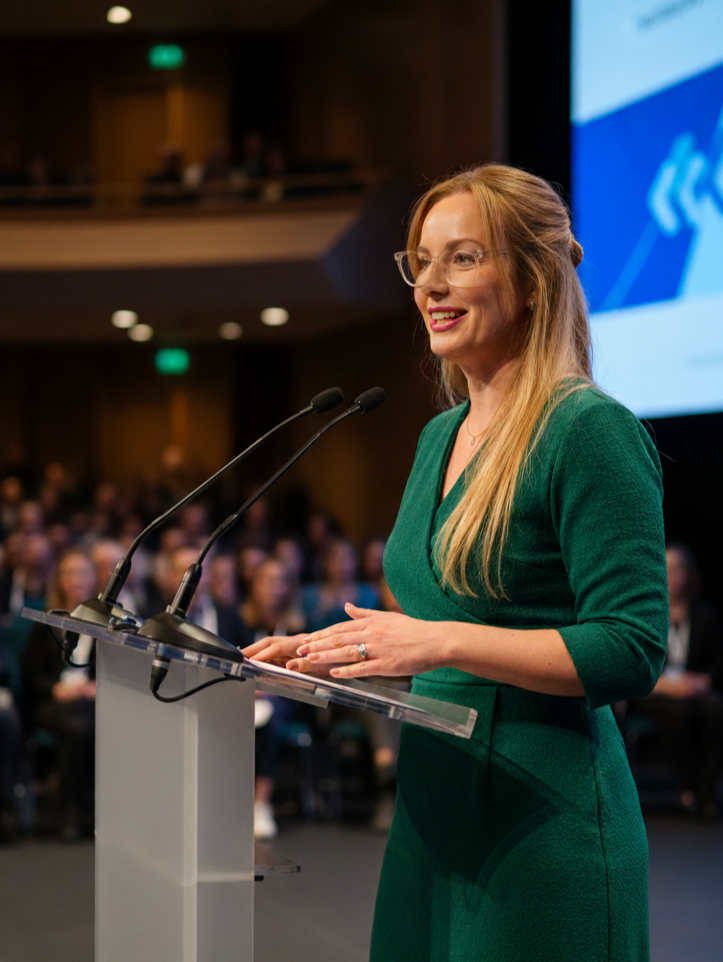
This work is grounded in cyberpsychology and 25 years in NHS communications, including ten years leading communications on major digital transformations such as electronic patient record roll-outs. Sonya was a founding architect of the NHS Communications AI Taskforce and authored its original governance structure and the NHS’s first AI operating framework. She is an AI Ambassador at the Department of Health and Social Care and chairs the Patient and Public Advocacy Steering Committee at UK Digital Health and Care.
“These sessions have been so helpful. I now want to put more energy into refining my critical thinking than worrying about AI and my job.”
ICS Intro into AI session participant, March 2026
Frequently Asked Questions
-
The Judgement Integrity Framework is a structured methodology developed by Sonya Cullington for public sector organisations implementing AI in high-stakes environments. It applies cyberpsychology principles to governance design, specifically addressing how AI tools affect professional judgement over time, and building the oversight structures, decision criteria, and accountability mechanisms that protect against automation drift and judgement erosion. The Framework includes a full-day working session with teams, followed by three 90-minute accountability sessions over three months, applied to live workflows.
-
Standard AI governance typically focuses on policy documentation, compliance checklists, and technical risk assessment. Behavioural AI governance examines how humans actually interact with AI systems in practice, how trust develops, how oversight degrades, and how professional judgement is affected at the individual and team level. It addresses the gap between what a governance policy says should happen and what operationally does happen when staff use AI tools under time pressure, in complex situations, or with incomplete information.
-
A behavioural risk audit assesses how an organisation's current AI tools are affecting the people using them, not just whether the tools are technically safe or policy-compliant. It tests for automation drift (declining human oversight), judgement erosion (reduced independent decision-making capacity), and misplaced trust calibration. The audit identifies where AI use is creating invisible risk in consequential decisions before that risk surfaces in outcomes.
-
Public sector AI use carries accountability structures, democratic obligations, and consequences for citizens that do not apply in most private sector contexts. Decisions shaped or informed by AI in health, social care, welfare, or justice settings may be irreversible and affect people with no means of redress. Standard enterprise AI governance frameworks are not designed for this environment. The work Sonya Cullington does in the public sector is specifically built around high-stakes, high-accountability decision-making contexts.
-
AI policy is a document. Governance that works is the operational reality of how people make decisions involving AI, the criteria they apply, the oversight they maintain, the escalation pathways they use. Most public sector organisations have strong policy intent and weak operational implementation. The gap between the two is where risk accumulates. This work focuses specifically on closing that gap.
-
The work is most relevant for senior leaders accountable for AI implementation, heads of digital, directors of transformation, chief operating officers, as well as governance leads and teams working directly with AI tools in service delivery. It is also relevant for communications and policy leads responsible for public accountability around AI use.
-
Yes. While much of the framework was developed within NHS and UK government contexts, the underlying cyberpsychology principles and governance methodology apply across public sector environments internationally. Previous work includes engagement with government teams outside the UK.