

What happens to human judgement when AI becomes part of everyday work?
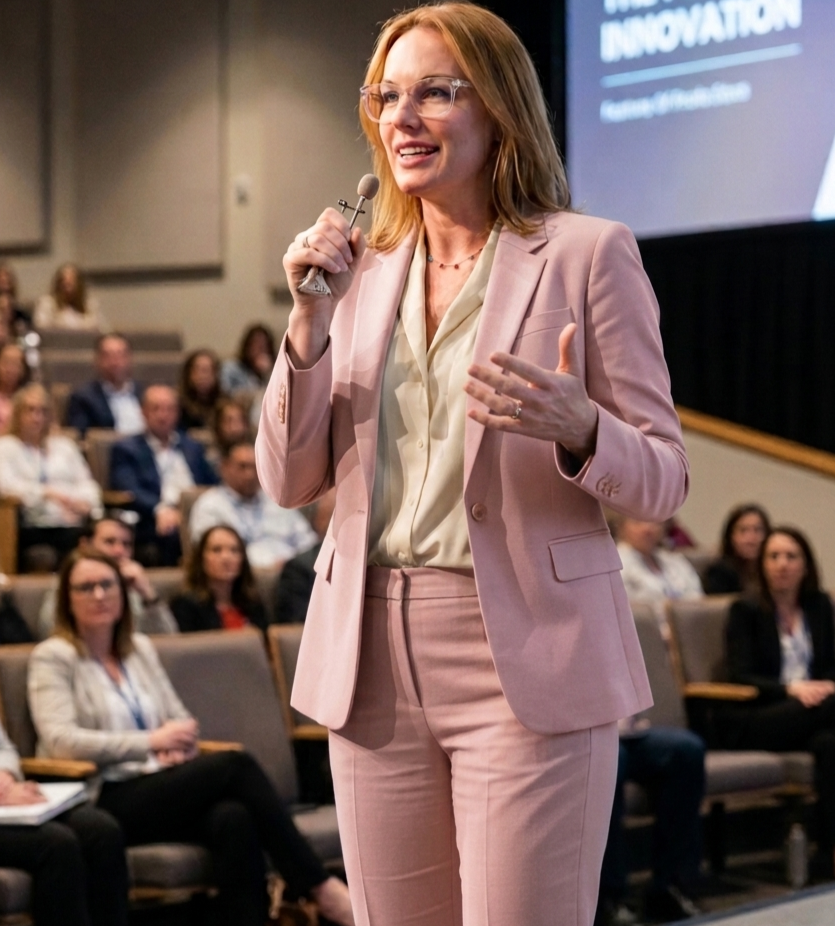
Keynotes and conversations on AI, behaviour, trust and the future of professional judgement.
AI is often discussed in terms of capability, productivity and adoption.
My talks look at what happens on the other side of the technology:
What does AI do to the people using it?
I bring together cyberpsychology, AI adoption and 25 years of experience working in high-stakes professional environments to explore the questions that conventional AI conversations often leave out.
→ Start a conversation about your event below.
KEY TOPICS
The Quiet Failures
Why technically successful AI systems still fail
An AI system can work exactly as designed and still create problems.
People may stop checking. Expertise may become harder to see. Teams may comply without feeling confident enough to challenge the system.
The result is a quiet failure: everything appears to be working until something important goes wrong.
This talk explores the behavioural risks that AI adoption metrics miss.
Audiences leave with: an understanding of where quiet failures start, the early signs to look for in their own teams, and the questions to ask when adoption figures look healthy.
The Judgement Gap
Why confidence and competence drift apart
AI can make people faster and more confident. Confidence and the ability to judge whether an output is right develop separately.
This talk looks at what happens when confidence in AI-assisted work outpaces independent professional competence, and how calibrated trust helps people avoid both over-reliance and blanket scepticism.
Audiences leave with: a clear picture of how the gap opens, how to recognise it in their own work, and what calibrated trust looks like in practice.
The Rubber Stamp
When oversight stops being oversight
Putting a human into an AI process is not the same as preserving human judgement.
For oversight to work, people need the confidence, psychological safety, expertise and cognitive capacity to challenge what the system produces.
This talk examines what happens when those conditions disappear, and what organisations can do about it.
Audiences leave with: knowledge of the conditions oversight depends on, how to tell when they are missing, and what leaders can do to restore them.
“Sonya has articulated the things we have been seeing for some time but just didn’t have the words for - really valuable insight that will change how we take our work forward”
RCGP AI Event: Dr Chughtai - Orthepeadic surgeon
A speaker who understands the real-world context
My work combines cyberpsychology with 25 years of experience in NHS communications, public policy and digital transformation, including ten years leading communications on major NHS digital programmes. I was a founding architect and board member of the NHS Communications AI Taskforce, and I continue to advise as an AI Ambassador at the Department of Health and Social Care.
That means the talks are grounded in what happens when technology meets real people, real organisations and real consequences.
Bring the conversation to your audience
I offer keynotes, conference sessions, fireside conversations, panels and tailored leadership sessions.
BOOKING
The thinking the field is currently avoiding.
If you are looking for a speaker who will give your audience the thinking the field is avoiding, on behavioural risk, on equity, on what AI actually does to the people expected to use it, get in touch.
Women in AI
Sensemaking Conversation August 2026
A wide-ranging conversation covering the impact of AI on identity, society, health care and health workers. We discussed the need to step back and look beyond the technology, directing our attention to the ways in which AI has altered decision-making and contributed to disadvantage - and more besides.
PREVIOUS APPEARANCES
The AI Powered Patient: Clinical teams readiness
AI Digital Health Conference, Royal College of Physicians June 2026
The patient who walks into your consultation today is not a Dr Google patient with better material. This talk explains what has actually changed, why the usual moves are not landing, and what clinical teams need to be ready for.
The Trust and Disclosure Paradox: Why Patients Tell Bots What They Won’t Tell Doctors
Healthcare Communicators Association Webinar, February 2026
Why patients disclose more to chatbots than to clinicians, and the equity risks that follow when automated systems become the default interface for vulnerable populations.
The Quiet Failures: Why Technically Successful AI Systems Still Fail
Digital Leaders Network, March 2026
What happens after AI goes live: how leaders mistake uptake for trust, consent for confidence, and silence for success.
NHS AI Adoption in Communications
TechPulse Healthcare: Transforming Healthcare with XR and AI, Jan 2026 · hosted by Atif Nasim and Jonathan Probets
Why AI adoption in NHS communications is stalling despite massive patient uptake, and why judgement frameworks matter more than tool access.
The Productivity Paradox: AI, Cognitive Strain, and Quiet Failure
PRCA Sparks: Productivity in PR, with Nigel Sarbutts
Why new technologies often increase workload and cognitive strain rather than reducing them, and why sustainable productivity depends on organisational conditions rather than tool adoption.