INTRODUCTION
All three service offers are grounded in cyberpsychology, the study of what technology does to human cognition, behaviour, and professional identity at scale. That is what separates this work from compliance reviews, technical training, and change management.
Behavioural risk auditing diagnoses where judgement is at risk in current AI deployments. Behavioural governance design builds the operational infrastructure that holds policy together in practice. The Judgement Integrity Framework™ develops the people doing the work, so the standards survive contact with delivery.
Behavioural risk auditing
ADVISORY
The problem. AI systems get tested for accuracy, cost, and compliance. They rarely get tested for what they do to the people using them. Automation drift, cognitive bias, and the gradual erosion of professional judgement are usually invisible until they surface in decisions that affect vulnerable people.
What you get. A behavioural risk assessment of how AI tools are actually affecting decision-making in your specific operational context, with practical recommendations tied to your governance and accountability obligations.
Who it's for. Directors and senior leaders who are accountable for AI use across a function or organisation.
Behavioural governance design
GOVERNANCE
The problem. Most public sector organisations have AI policy on paper and limited infrastructure for putting it into practice. The ethics frameworks exist. The guidance is circulating. What is missing is the connective tissue between commitment and operational reality.
What you get. Practical governance instruments your teams can actually use. Decision criteria, oversight processes, accountability mechanisms, and escalation pathways, calibrated to your risk profile and delivery context.
Who it's for. Leadership teams designing or revising AI governance.
Judgement integrity framework™
PROFESSIONAL DEVELOPMENT
The problem. Public sector teams are already using AI to summarise documents, transcribe meetings, and produce first drafts. Some of it works. Significant time is being spent redoing outputs that should not have been trusted in the first place. The real risk is the quieter erosion of judgement, under pressure, in environments where the consequences fall on people who had no say in the technology decision.
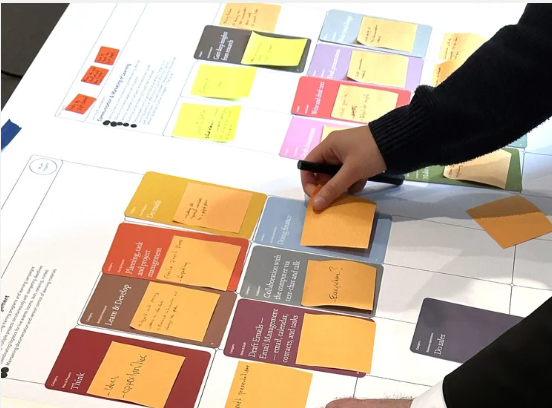
What you get. A full-day working session built around your team's actual workflows and live testing, followed by three required 90-minute accountability sessions over the following three months. By the end, your team will have a personally tested picture of where AI fits in their work, a shared standard they can explain and defend, and an individual commitment with a mechanism that reaches into the working week. The outcome is a team that makes better AI decisions, consistently and defensibly.
Who it's for. Teams of up to 15 people whose AI-assisted outputs carry professional, reputational, or public interest consequences.
Also available
One-hour introductions and one-day workshops are available for public sector teams who want training in the same methodology without the full Judgement Integrity Framework™ engagement. These are the same sessions offered to business leaders, adapted for public sector contexts.
Not sure which one you need?
A 20-minute scoping call is the right first step.